
Fresh Middle East-driven oil spike pushes headline CPI to its highest in months, but economists say the Bank of England will likely sit tight.
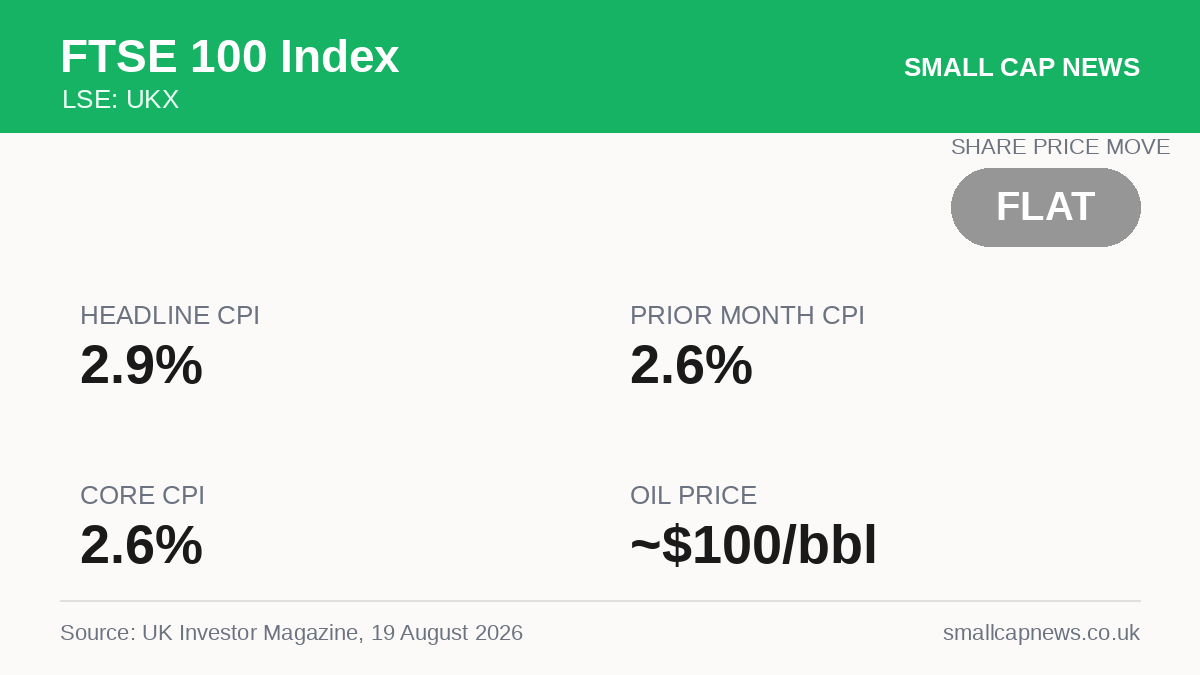
UK inflation accelerated sharply in the year to July, with the headline rate climbing to 2.9% from 2.6% the previous month, as renewed conflict in the Middle East drove oil prices back towards $100 a barrel and fed through to household energy bills. The move, in line with economist forecasts, has significant implications for London-listed stocks tracked via the FTSE 100 (LSE: UKX), where rate-sensitive sectors are watched closely for signs of Bank of England policy shifts.
The uptick was driven almost entirely by the energy component, with the uplift to the household bill price cap doing the heavy lifting. Core inflation, which strips out volatile food and energy prices, held steady at 2.6%, while the services measure that the Bank of England watches closely actually eased slightly, suggesting the headline jump was an external shock rather than a sign of broader price pressures building through the economy.
Felix Feather, economist at Aberdeen, said the rise from 2.6% to 2.9% was widely anticipated and showed little evidence of contagion into other goods and services. He said markets remained calm on the release, still pricing in only modest tightening from the Bank of England, and argued that underlying domestic inflation pressures were actually softening.
Hal Cook, senior investment analyst at Hargreaves Lansdown, pointed to a weakening jobs market as another reason to expect the Bank to hold fire on rates despite inflation running above its 2% target. He flagged rising unemployment, falling payroll numbers and declining vacancies as signs the economy is cooling even as headline prices tick higher.
With both Aberdeen and Hargreaves Lansdown now expecting the Bank of England to keep rates on hold for the remainder of the year, investors will be watching upcoming labour market and services inflation data closely for any sign that the energy-driven spike is starting to spread into wages and core prices, which would force a rethink.
This report is based on FTSE 100 Index’s announcement and coverage by UK Investor Magazine. Company announcements can be tracked via London Stock Exchange RNS and Investegate, and the full results calendar is worth watching for the next update.
This article is for general information only and does not constitute investment advice or a recommendation to buy or sell any security. Photo: Zbynek Burival on Unsplash.

Small Cap News covers London’s junior market – AIM, small-cap and growth companies – with concise, sourced reporting on the results, deals and regulatory news that move share prices. We track the stories private investors actually need, from contract wins and drilling updates to fundraises and half-year figures, straight from the market’s own announcements.