
A coordinated G7 and IEA move to accelerate emergency oil and diesel releases has sent wholesale costs tumbling, with economists predicting pump-price relief within weeks.
N/A (LSE: N/A) This is a macro energy-market development with no single listed company (N/A: N/A) at its centre, but its ripple effects will be felt across the UK's haulage, retail and inflation-linked sectors. Pantheon Macroeconomics says European diesel crack spreads, the gap between crude and refined diesel prices, have fallen around 12% since 30 September, a shift that could translate into a 5p-6p cut per litre at British forecourts if fully passed through.
The move follows a sharp spike that pushed UK diesel above £2 a litre, driven by Middle East conflict disruption and strikes on Russian refining capacity. The G7 and International Energy Agency responded by agreeing to release roughly 100 million barrels of oil and refined fuel from emergency stockpiles more quickly than originally scheduled, prioritising diesel because shortages of refined middle-distillates had become more severe than raw crude shortfalls.
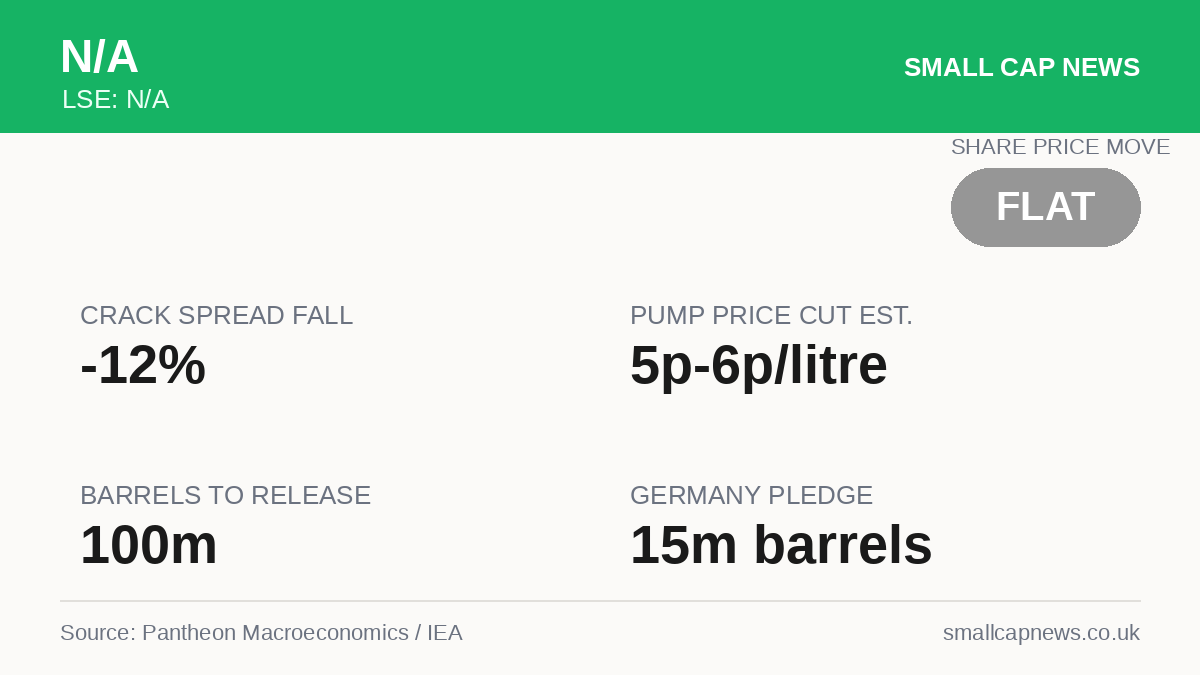
Germany has already pledged up to 15 million barrels of crude, diesel and heating oil towards the effort, with other European governments expected to follow. The intervention has also eased fears that the US might restrict diesel exports after President Trump considered a ban amid surging domestic prices; Washington has instead signed up to the G7's pledge to keep energy trade open, while separately allowing temporary highway use of red-dyed diesel through an executive order deferring related excise-tax liabilities until the end of 2026.
For UK motorists, a full 5p-6p reduction would knock around £3.30 off the cost of filling a typical 55-litre tank, while Pantheon estimates the relief could shave two to three basis points off near-term inflation forecasts, a modest but welcome offset to transport and freight costs that have been squeezing household budgets.
The relief remains conditional, however. Much of the 100 million-barrel release represents faster deployment of reserves already committed rather than fresh supply, and the underlying squeeze on global refining capacity has not been resolved. Analysts caution that renewed Middle East tensions, further refinery outages or a reversal on export policy could quickly erode the price gains, leaving diesel markets volatile heading into winter.
This report is based on N/A’s announcement and coverage by Share Talk. Company announcements can be tracked via London Stock Exchange RNS and Investegate, and the full results calendar is worth watching for the next update.
This article is for general information only and does not constitute investment advice or a recommendation to buy or sell any security. Photo: Rock Staar on Unsplash.

Small Cap News covers London’s junior market – AIM, small-cap and growth companies – with concise, sourced reporting on the results, deals and regulatory news that move share prices. We track the stories private investors actually need, from contract wins and drilling updates to fundraises and half-year figures, straight from the market’s own announcements.