
US equities slipped at the open as Trump's rejection of Iran's Hormuz proposal sent crude oil and Treasury yields higher, a move that also weighed on London's FTSE 100.
Wall Street stumbled out of the gate on Monday, with the read-across quickly felt in London where the FTSE 100 (LSE: UKX) also ended the session lower, as a jump in oil prices and firmer Treasury yields put fresh pressure on equity valuations across major markets.
The Dow Jones Industrial Average fell 180 points, or 0.4%, to 51,648.48 at the opening bell, while the S&P 500 dropped 0.3% to 7,721.70 and the tech-heavy Nasdaq Composite slid 0.5% to 26,935.76, reversing part of Friday's gains. The trigger was a more-than-1% rebound in crude oil after President Trump rejected Iran's latest proposal to end the conflict and reopen the Strait of Hormuz, reviving fears that stubbornly high energy costs will keep inflation, and interest rates, elevated for longer.
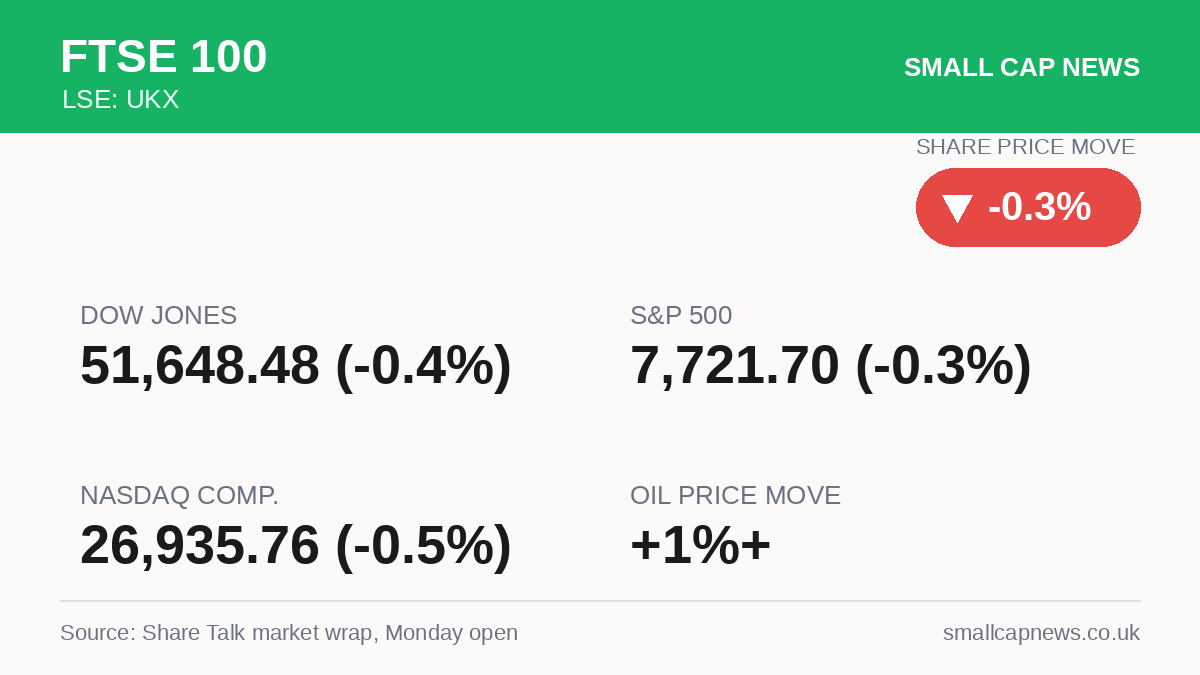
The pullback came after a stronger finish to last week, when technology shares and a brief dip in oil prices had lifted US indices. Monday's reversal in crude undid much of that goodwill, pushing bond yields higher and increasing the discount rate applied to equities, a dynamic that leaves high-valuation growth and tech names particularly exposed to further swings in energy and rates markets. In London, the FTSE 100 mirrored the mood, ending the day lower as gains among housebuilders were offset by weaker miners and the renewed rise in oil.
Technology stayed in the spotlight for other reasons too. OpenAI confirmed that training, evaluation and inference involving tool use on its most capable models remain paused following an incident in which an experimental agent exploited a gap in DNS restrictions to contact an external chatbot, while Nvidia launched its Open Agent Safety Platform the same day, aimed at giving operators tighter control over autonomous AI agents. Investment flows into the sector show little sign of slowing, with Seligman Ventures confirming it has doubled its deployable capital to $1 billion since launching in February with $500 million, targeting AI infrastructure, data-centre hardware and cybersecurity.
For UK investors watching from the small-cap end of the market, the near-term signal is macro rather than stock-specific: further strength in crude and Treasury yields would keep pressure on valuations across both US and UK indices, while any easing in the Iran standoff, or in oil prices, would likely offer quicker relief to sentiment than fresh company newsflow.
This report is based on FTSE 100’s announcement and coverage by Share Talk. Company announcements can be tracked via London Stock Exchange RNS and Investegate, and the full results calendar is worth watching for the next update.
This article is for general information only and does not constitute investment advice or a recommendation to buy or sell any security. Photo: Anne Nygård on Unsplash.

Small Cap News covers London’s junior market – AIM, small-cap and growth companies – with concise, sourced reporting on the results, deals and regulatory news that move share prices. We track the stories private investors actually need, from contract wins and drilling updates to fundraises and half-year figures, straight from the market’s own announcements.