
A run of lower highs and a looming Budget-and-earnings double header have technical watchers eyeing a retreat towards 100p.
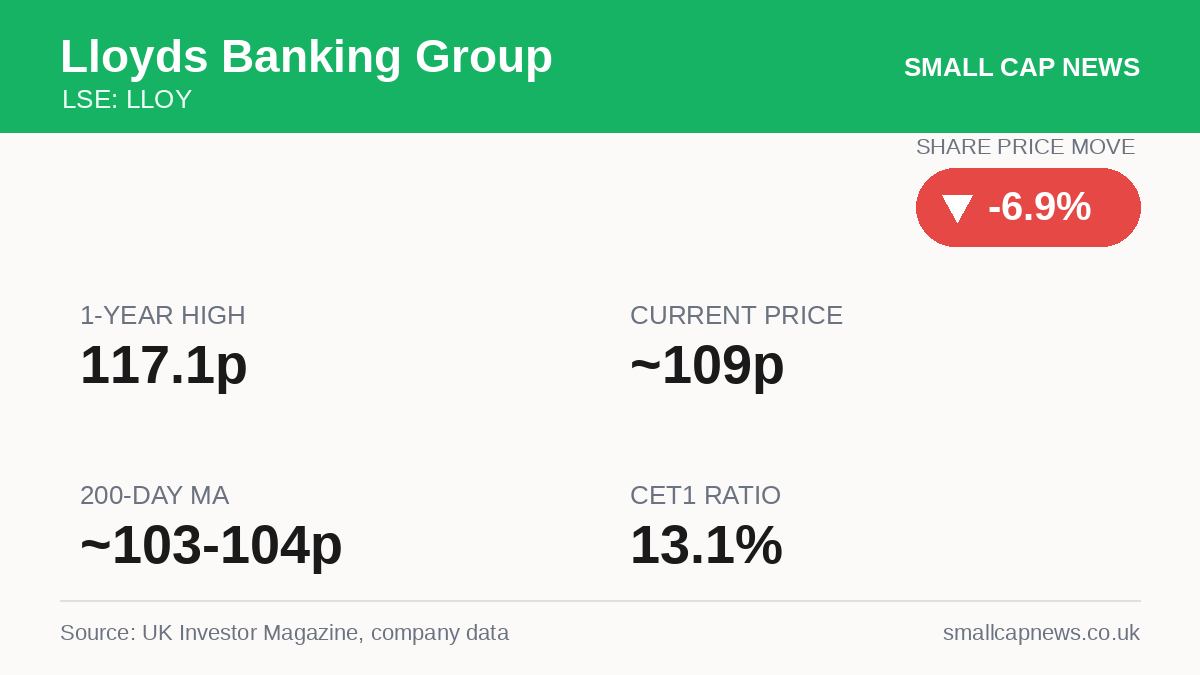
Lloyds Banking Group (LSE: LLOY) has been one of the FTSE 100's best performers over the past year, but the chart is starting to crack, with shares now around 109p having slipped roughly 7% from the 117.1p peak hit in mid-August.
The pullback follows a failed rally to 111.15p on 14 September, after which selling resumed and the stock broke below the 107-108p band that had underpinned trading through the month. That breach is being read by technical analysts as a warning sign, with the next obvious support the 200-day moving average, sitting around 103-104p and roughly 5% below the last close.
Over the past 12 months Lloyds shares have climbed around 30%, outpacing the FTSE All Share by nearly 13 percentage points, helped by a 30% increase in the interim dividend, rising income and a steady programme of buybacks. That strength means much of the good news may already be priced in, leaving the stock vulnerable to a deeper correction if support levels give way. A break of the 200-day average would bring the 100p psychological level into focus, close to the 50% retracement of the past year's rally at around 99p, a scenario that would represent an 8-9% fall from current levels without anything needing to go wrong operationally at the bank.
The backdrop for UK banks has turned less favourable. The Bank of England held Bank Rate at 3.75% in September on a 6-3 vote, with three members pushing for a rise to 4% as Middle East tensions keep oil prices elevated and inflation running hot. UK CPI reached 3.1% in August and is expected to climb toward 3.75% by year-end and above 4% in early 2027, with SONIA futures now pricing Bank Rate rising to roughly 4.5% by March 2027. As the UK's largest mortgage lender, Lloyds is exposed to households facing higher borrowing costs and energy bills even as higher rates support its structural hedge income.
Two catalysts land in quick succession next month: Chancellor Rachel Reeves's successor John Healey delivers his first Autumn Budget on 28 October, with speculation the bank surcharge could rise from 3% to 5-6% – each percentage point costs Lloyds around £75 million according to CFO William Chalmers – before the bank publishes its Q3 trading update the following morning. That combination is likely to inject volatility. Lloyds' balance sheet remains solid, with a 13.1% pro forma CET1 ratio and a fresh buyback of up to £1 billion providing some support, and brokers keep a consensus Buy rating with a 126p target, but tactically minded investors may prefer to wait for a test of lower levels before adding to positions.
This report is based on Lloyds Banking Group’s announcement and coverage by UK Investor Magazine. Company announcements can be tracked via London Stock Exchange RNS and Investegate, and the full results calendar is worth watching for the next update.
This article is for general information only and does not constitute investment advice or a recommendation to buy or sell any security. Photo: Ruben Hanssen on Unsplash.

Small Cap News covers London’s junior market – AIM, small-cap and growth companies – with concise, sourced reporting on the results, deals and regulatory news that move share prices. We track the stories private investors actually need, from contract wins and drilling updates to fundraises and half-year figures, straight from the market’s own announcements.